
Around 2007 - 2009, two different BCI stories were happening simultaneously. In one, cheap EEG headsets were showing up at CES under the label “mind control.” In the other, DARPA was quietly funding the labs and programs that would define serious BCI research for the next decade. The public story and the scientific story diverged here… and they’ve never fully reconnected.
In this post, I’m closing Phase 1 of this series by looking at the funding and cultural landscape that framed BCI research at the end of its first decade. The consumer neurotech wave created public awareness and a developer ecosystem, but also expectations the field couldn’t meet. The DARPA investment created capabilities and talent pipelines the field still draws on. Understanding both helps explain why BCI has this particular relationship with hype, and why that relationship keeps repeating.
Source material is on the bci0 research spine; the 2007–2010 yearly reviews are the backbone here.
Consumer neurotech arrives
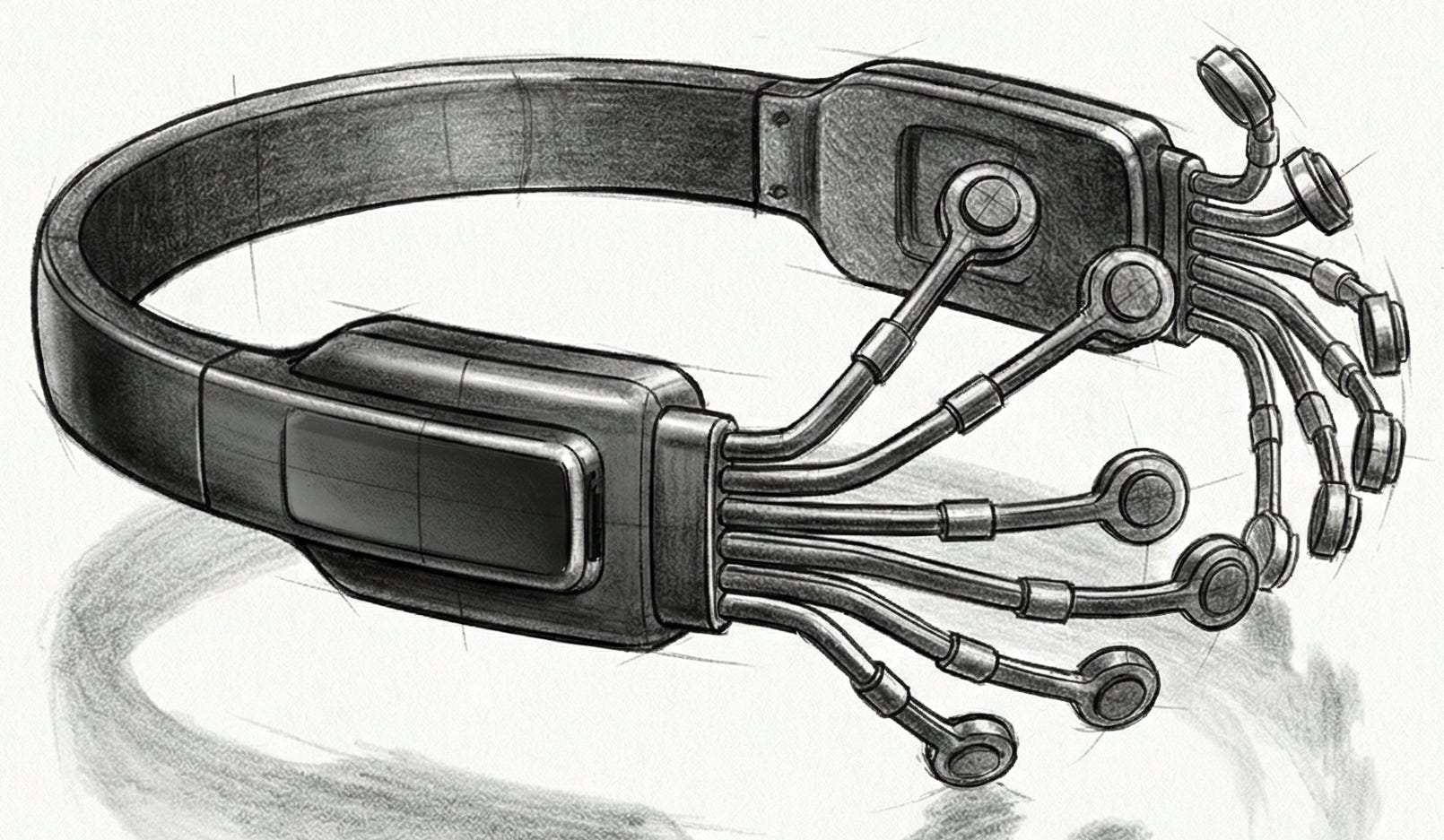
The Emotiv EPOC launched in 2009. It was a 14-channel wireless EEG headset retailing around $299, marketed toward game developers and tech enthusiasts under the tagline “Emotiv - Experience Your Emotions.” The demo videos showed people controlling virtual objects and characters with facial expressions, head movements, and “cognitive” signals decoded from the EEG. This last factor was heavily promoted by the company. The device appeared at gaming expos, technology conferences, and, critically, in mainstream media coverage framed around “mind control.”
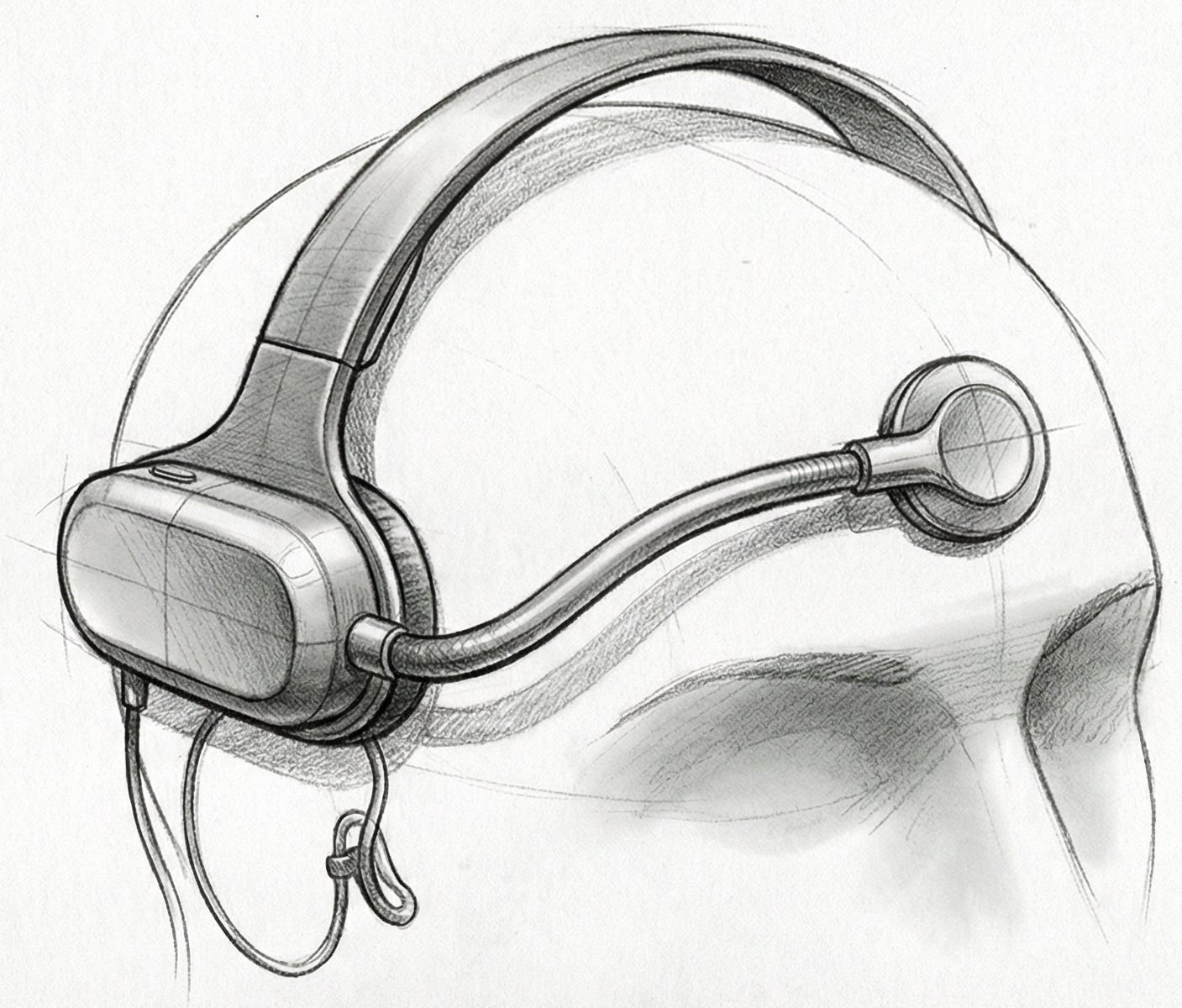
NeuroSky’s MindWave launched around the same period, even simpler: a single-channel EEG device that measured attention and relaxation states (really, frontal electrode power in the alpha and beta bands) and translated them into game control signals. Price point: around $80. NeuroSky’s SDK made it easy for developers to build applications, and it did! There was a small ecosystem of BCI games and biofeedback apps within a year or two of launch.
The honest accounting of what these devices could do is this: they could measure gross EEG features (alpha power, beta power, muscle artifacts, blink detection) with reasonable reliability. The Emotiv EPOC’s “cognitive” detection was largely trained on facial muscle EMG and head movement, not pure EEG. Neither device was capable of the kind of motor imagery decoding that the Graz group was doing in research labs with 64-channel systems and trained subjects. The “mind control” framing was marketing language, not a technical description.
None of that stopped the coverage. The phrase “reading your brain” appeared in headline after headline. Popular magazines ran features about mind-controlled games and “thought-powered” computers. The gap between what the devices could do and what the coverage implied was wide, but the story was too compelling to resist. A $300 headset. Mind control. Available now. The field got the attention it had never had from the $100 million NIH-funded work.
What the consumer devices did accomplish, which deserves credit: they introduced a generation of software developers and hardware hackers to EEG as a platform. Hackathons built BCI games. Makers modified the Emotiv EPOC’s firmware. OpenBCI, which would later become a serious open-source EEG hardware platform, grew partly from this ecosystem of people who had gotten their first exposure to neural signal acquisition through consumer headsets. The technology was crude. The pipeline it seeded was real.
DARPA and the serious money
While consumer neurotech was getting coverage, the programs that would actually shape the next decade of BCI research were being funded by DARPA and NIH with relatively little public attention.
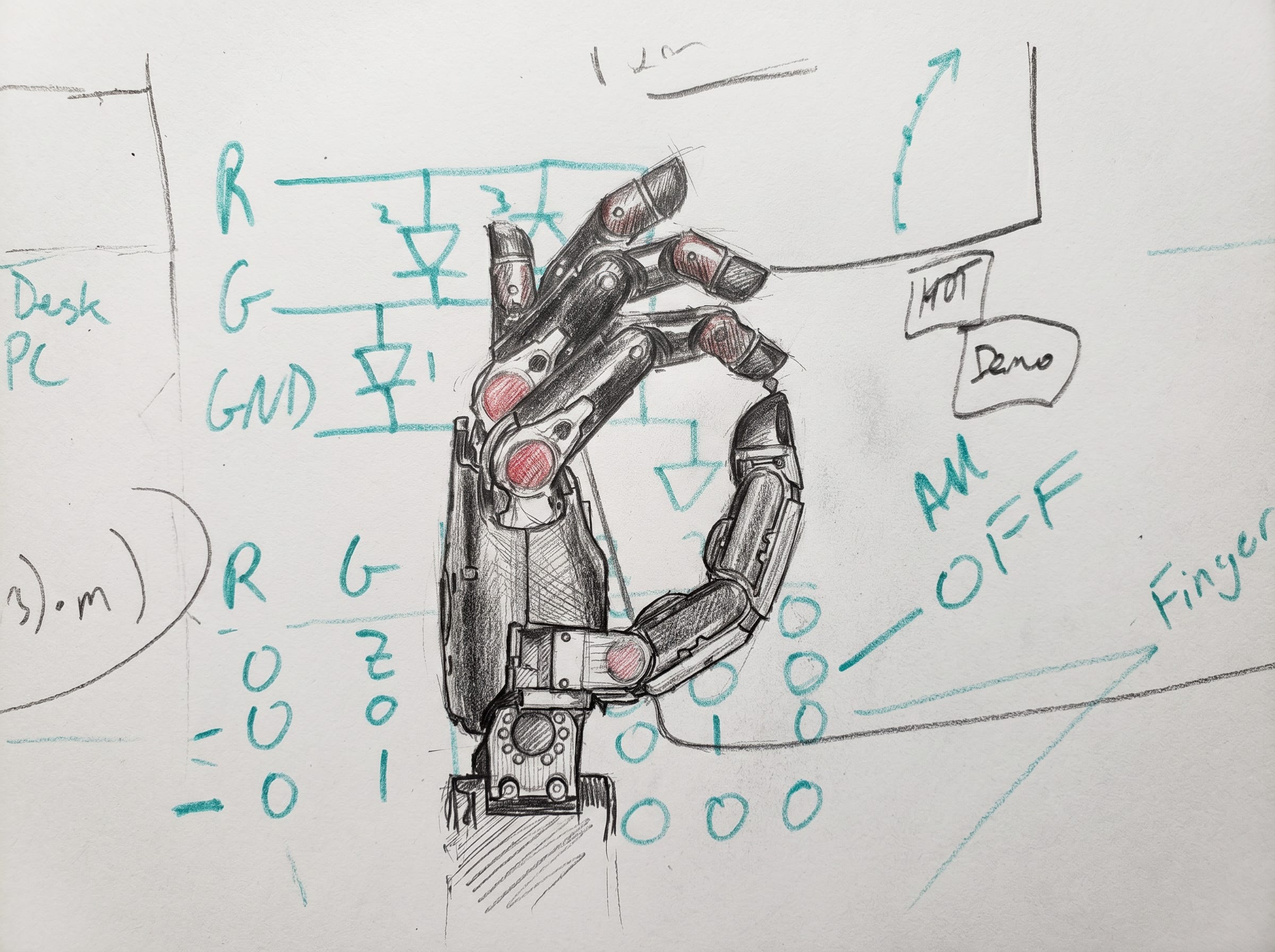
The most consequential was the Revolutionizing Prosthetics program, launched by DARPA in 2006. The goal was explicit and ambitious: build a prosthetic arm that could be controlled by thought, with sensory feedback, with performance approaching a natural limb. DARPA funded two parallel teams:
one at the Applied Physics Laboratory at Johns Hopkins (APL)
one at DEKA Research (Dean Kamen’s company)
to develop the hardware while research labs including BrainGate worked on the neural control interface. The APL arm, eventually called the Modular Prosthetic Limb, was a 100-degree-of-freedom device with individual finger control, shoulder and elbow joints, and force sensors. DEKA produced what became the FDA-approved DEKA Arm in 2014. The Revolutionizing Prosthetics program set a concrete engineering target and funded the work to reach it. That’s how DARPA works when it’s working well.
DARPA’s broader involvement in BCI research in this period ran through the Human Assisted Neural Devices (HAND) program and later programs covering cortical implants, sensory feedback, and neural decoding. The agency’s model was compatible with the risk profile of early BCI: long time horizons (5–10 year programs), high risk tolerance, willingness to fund academic labs directly, and an explicit preference for demonstrations rather than papers. The BrainGate work at Brown and MGH received DARPA and NIH funding throughout this period, as did Schwartz’s lab at Pittsburgh, Shenoy’s at Stanford, and Andersen’s at Caltech. The talent pipeline those labs produced → PhD students, postdocs, and research scientists funded directly or indirectly by DARPA and NIH grants → went on to found or lead many of the BCI companies that would emerge in the 2010s and 2020s.
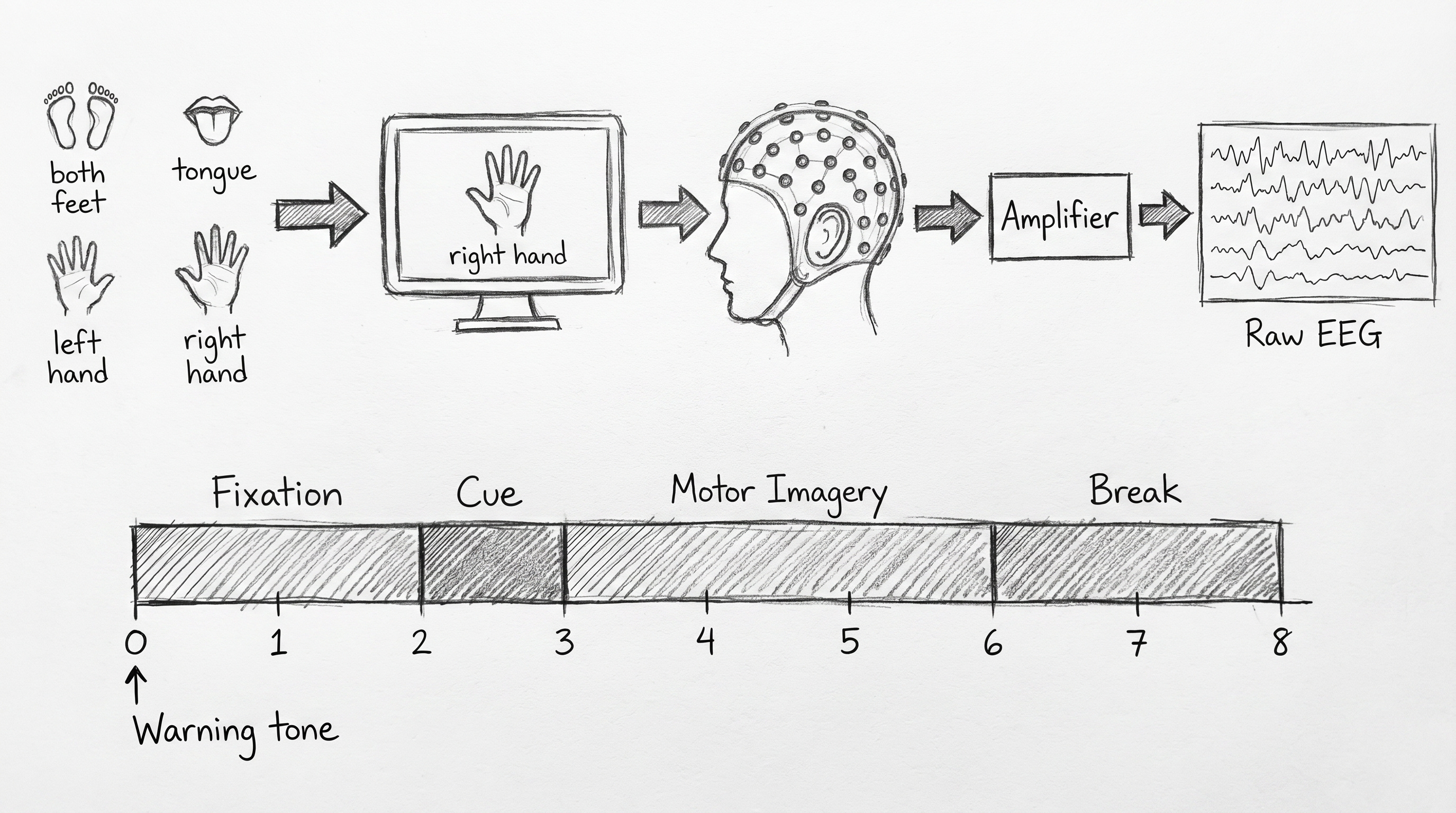
The BCI Competition datasets deserve mention in this context. The competitions were organized by a European consortium of labs and run in 2003, 2005, and 2008. These competitions were a form of public good that government and academic funding made possible. They distributed labeled EEG, ECoG, and LFP datasets to the research community and scored blind test-set performance, creating the shared benchmarks the field needed. The BCI Competition IV’s 2008 datasets (four-class motor imagery, continuous ECoG cursor control, and MEG decoding) attracted competitive algorithm submissions from dozens of groups globally. Common spatial pattern filtering emerged as the clear winner for motor imagery EEG decoding, cementing its use across the non-invasive BCI community for the following decade. Without public funding and academic organization, those datasets wouldn’t have existed, and the field’s algorithmic progress would have been slower and harder to compare.
The expectations gap
The divergence between the consumer story and the research story wasn’t just a communications problem. It shaped how the field was perceived, funded, and scrutinized for years afterward.
When Emotiv and NeuroSky were getting breathless press coverage about mind control in 2009, the BrainGate team was doing something far more modest: managing an IDE-approved clinical trial with a handful of participants, under strict FDA oversight, producing cursor control that required daily recalibration and a trained technician. When the consumer narrative implied that BCI was a solved problem available at your local electronics store, it made the actual research look like it was failing to deliver. It created an implicit benchmark of “why can’t this device do what that $300 headset promised?” that bore no relationship to what the science was actually attempting.
The expectations gap created a recurring pattern: consumer products would make dramatic claims, media coverage would amplify them, public expectations would rise, and then the scientific community would spend years explaining why those expectations were wrong. This cycle has repeated with every generation of consumer neurotech since. The Muse meditation headband in the early 2010s. The various “focus enhancement” EEG startups. And more recently, the broader consumer wellness EEG market. Each iteration generated attention and some developer ecosystem activity; none delivered what the marketing implied.
The more structurally important point is that this divergence left BCI research in an odd position:
enormous public interest, persistent media attention, a growing community of hobbyists and developers
simultaneously, a clinical and commercial reality that lagged far behind those expectations
The field was pre-commercial and pre-regulatory for cortical devices. No BCI startup had found a sustainable business model outside cochlear implants and DBS. The academic labs doing the serious work were largely invisible to the audiences the consumer products had cultivated.
Why it mattered
Consumer devices created a pipeline of people who cared about BCI before it was clinical. Some of the developers who built Emotiv applications in 2010 became the BCI engineers of the 2020s. The hobbyist community kept BCI visible during years when the clinical pipeline was slow and opaque.
DARPA funding built the labs, trained the students, and funded the electrode technology and prosthetic hardware that today’s companies are commercializing. Blackrock Microsystems, the company that acquired Cyberkinetics’ manufacturing assets in 2008 and became the dominant supplier of Utah Arrays to research labs, exists because of that funding ecosystem. The Modular Prosthetic Limb from APL became the hardware platform for multiple BrainGate demonstrations. The Kalman filter for neural decoding, now standard, was developed and refined in DARPA-funded labs. Federal investment in long-horizon, high-risk research created capabilities that private capital wouldn’t have funded and that no startup was positioned to build.
The expectations gap, though, became a structural feature of the field. Every major BCI moment since (Neuralink’s first announcement, BrainGate’s robotic arm demonstrations, Synchron’s first human implant) has involved a negotiation between what the public story says and what the science actually shows. That negotiation is exhausting for researchers and often produces either over-promising or defensive under-claiming. It’s not unique to BCI; it’s a common pattern in fields where the technology is genuinely important but the timelines are genuinely long. But the 2008–2010 period is where it crystallized.
What was still uncertain
Whether consumer EEG would ever cross from novelty to utility was genuinely open. The honest answer in 2010 was probably no, because the device quality and the algorithmic approaches available at consumer price points weren’t close to clinical reliability. It was not because EEG signals were useless. The market for EEG-based games and meditation apps was real but small. The pathway from consumer curiosity to clinical adoption was unclear.
Whether DARPA-funded research would translate to civilian commercial products was also uncertain. The Revolutionizing Prosthetics program produced impressive hardware. Whether that hardware would find commercial and regulatory pathways to reach the patients who needed it was a different question. The FDA-approval gap for neural devices made this particularly murky. The DEKA Arm’s eventual 2014 FDA clearance was a validation of the program, but it took eight years from DARPA launch to approval, and even then commercial deployment remained limited.
The academic-dominated structure of the field had virtues (long time horizons, scientific rigor, openness) but it had real limits. Academic labs couldn’t manage clinical trials at scale, couldn’t iterate product designs rapidly, couldn’t build the manufacturing, regulatory, and commercial infrastructure that devices eventually required. The startup wave was coming, but as of 2010 it was still years away.
Phase 1 in eight years
By the end of 2010, BCI had gone further than most people outside the field realized… and less far than the public narrative implied. Matthew Nagle had moved a cursor with his thoughts in 2004. BrainGate had published in Nature in 2006. The Utah Array had been in human brains for years. ECoG had revealed unexpected signal richness on the cortical surface. Cochlear implants had proved that neural interfaces could be safe, durable, and routine. A generation of developers had gotten their first EEG exposure from consumer headsets.
What it didn’t have: a commercial product for motor restoration, a reimbursement pathway, a second clinical success at anything approaching cochlear implant scale, or a realistic near-term path to home use for intracortical devices. The field was scientifically successful and commercially nascent.
Phase 2 starts with a catalyst from outside neuroscience entirely. In the early 2010s, deep learning began transforming how neural signals could be decoded. Advancement was not through better electrode technology or better surgical approaches, but through better mathematics applied to the data the existing hardware was already collecting. That’s the next post.